Afghan coat
When and where was this item first created, and what practical purpose did it serve?
The Afghan coat emerged from the mountainous regions of Afghanistan where nomadic tribes crafted these garments for survival in harsh winters. Local artisans used sheepskin from karakul sheep, turning the hide inside out so the wool faced inward for maximum warmth. The leather exterior provided wind and moisture protection during brutal mountain conditions.
These coats served multiple purposes beyond warmth. Herders wore them while tending flocks in high altitudes where temperatures plummeted below freezing. The distinctive embroidered patterns held cultural significance, with each tribe developing unique motifs that identified their heritage.
Colors came from natural dyes extracted from local plants and minerals. Western travelers first encountered these coats in Afghan bazaars during the 1960s, particularly in Kabul’s markets where merchants sold them to international visitors. The coats represented centuries of practical design evolution, with construction methods passed down through generations of skilled craftspeople.
These coats served multiple purposes beyond warmth. Herders wore them while tending flocks in high altitudes where temperatures plummeted below freezing. The distinctive embroidered patterns held cultural significance, with each tribe developing unique motifs that identified their heritage.
Colors came from natural dyes extracted from local plants and minerals. Western travelers first encountered these coats in Afghan bazaars during the 1960s, particularly in Kabul’s markets where merchants sold them to international visitors. The coats represented centuries of practical design evolution, with construction methods passed down through generations of skilled craftspeople.
What are the key design features and construction methods of this item?
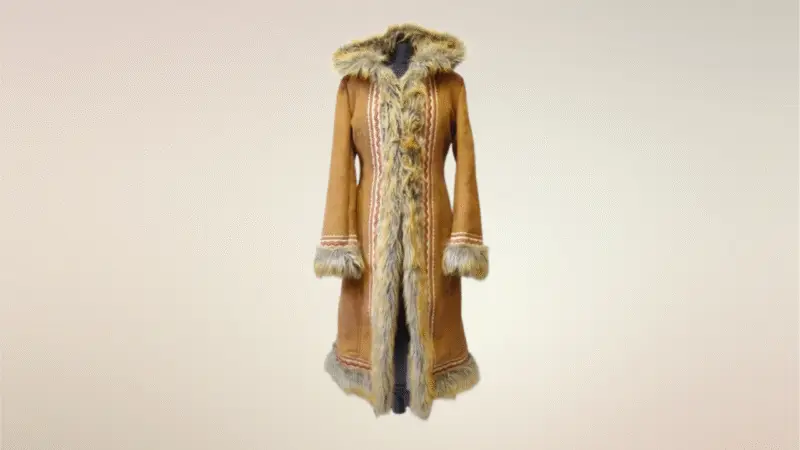
Afghan coats feature distinctive sheepskin construction with wool facing inward and leather exterior surfaces. The silhouette is typically knee-length with wide, flowing lines that allow for layering underneath. Sleeves are usually straight-cut and roomy, designed for freedom of movement during physical work.
The most recognizable feature is the intricate embroidered decoration covering the leather exterior. These embroideries use silk or cotton threads in vibrant colors like deep reds, blues, greens, and yellows. Patterns often include geometric designs, floral motifs, and abstract symbols specific to regional tribes.
Construction involves hand-stitching techniques using heavy-duty threads that can withstand extreme wear. Closures typically consist of toggles, loops, or simple tie systems rather than buttons or zippers. The collar is usually stand-up style, providing neck protection in cold conditions.
Interior wool remains in its natural cream or beige color, creating striking contrast with the decorated exterior. Some variations include fur trim around collars and cuffs, adding extra warmth and visual impact.
The most recognizable feature is the intricate embroidered decoration covering the leather exterior. These embroideries use silk or cotton threads in vibrant colors like deep reds, blues, greens, and yellows. Patterns often include geometric designs, floral motifs, and abstract symbols specific to regional tribes.
Construction involves hand-stitching techniques using heavy-duty threads that can withstand extreme wear. Closures typically consist of toggles, loops, or simple tie systems rather than buttons or zippers. The collar is usually stand-up style, providing neck protection in cold conditions.
Interior wool remains in its natural cream or beige color, creating striking contrast with the decorated exterior. Some variations include fur trim around collars and cuffs, adding extra warmth and visual impact.
What cultural movements and social contexts featured this item?
The hippie counterculture movement of the late 1960s embraced Afghan coats as symbols of rejection against mainstream Western fashion and values. Young Americans and Europeans traveling the “hippie trail” through Afghanistan, India, and Nepal brought these coats back as treasured souvenirs. The coats represented authentic craftsmanship versus mass-produced clothing, aligning with hippie values of handmade goods and cultural appreciation.
Musicians like Jimi Hendrix, Janis Joplin, and members of The Beatles popularized Afghan coats in concert performances and public appearances. The psychedelic movement found visual harmony between the coats’ vibrant embroidery and their colorful aesthetic preferences. These garments became associated with drug culture and alternative lifestyles, sometimes leading to discrimination against wearers in conservative communities.
Fashion magazines initially dismissed Afghan coats as costume-like, but their popularity forced mainstream recognition. The coats symbolized cultural bridge-building during a time of increasing global awareness. Their adoption represented the hippie generation’s desire to embrace Eastern philosophy and reject materialistic Western society.
Musicians like Jimi Hendrix, Janis Joplin, and members of The Beatles popularized Afghan coats in concert performances and public appearances. The psychedelic movement found visual harmony between the coats’ vibrant embroidery and their colorful aesthetic preferences. These garments became associated with drug culture and alternative lifestyles, sometimes leading to discrimination against wearers in conservative communities.
Fashion magazines initially dismissed Afghan coats as costume-like, but their popularity forced mainstream recognition. The coats symbolized cultural bridge-building during a time of increasing global awareness. Their adoption represented the hippie generation’s desire to embrace Eastern philosophy and reject materialistic Western society.
Is this item still produced today, and how has it evolved over time?
Afghan coats experienced a major revival during the early 1970s when high-end fashion designers began creating interpretations for luxury markets. Designers like Yves Saint Laurent and Kenzo incorporated similar construction techniques and aesthetic elements into their collections. However, authentic Afghan coats became increasingly difficult to source as political instability in Afghanistan disrupted traditional trade routes.
Modern versions typically use different materials like faux sheepskin or treated lamb leather to reduce costs and improve durability. Contemporary interpretations often feature machine embroidery rather than hand-stitched decoration, resulting in more uniform but less authentic appearance. Some designers have maintained traditional construction methods while updating silhouettes for modern body shapes and preferences.
Bohemian fashion revivals in the 1990s and 2000s brought renewed interest in authentic Afghan coats among collectors and vintage enthusiasts. Today, genuine vintage pieces command high prices at auction houses and specialty vintage dealers. Several contemporary brands produce “Afghan-inspired” coats that capture the aesthetic while using modern materials and construction techniques.
Modern versions typically use different materials like faux sheepskin or treated lamb leather to reduce costs and improve durability. Contemporary interpretations often feature machine embroidery rather than hand-stitched decoration, resulting in more uniform but less authentic appearance. Some designers have maintained traditional construction methods while updating silhouettes for modern body shapes and preferences.
Bohemian fashion revivals in the 1990s and 2000s brought renewed interest in authentic Afghan coats among collectors and vintage enthusiasts. Today, genuine vintage pieces command high prices at auction houses and specialty vintage dealers. Several contemporary brands produce “Afghan-inspired” coats that capture the aesthetic while using modern materials and construction techniques.
How do you identify authentic vintage versions of this item?
Authentic vintage Afghan coats feature genuine sheepskin with natural wool that shows characteristic aging patterns and wear. The leather exterior develops a distinctive patina over time, becoming softer and more supple while retaining structural integrity. Hand-stitched embroidery shows slight irregularities in tension and spacing that machine work cannot replicate.
Thread colors fade unevenly, creating subtle variations within each embroidered section. Original wool interiors mat down naturally from wear, developing smooth areas where the body made contact. Authentic pieces smell distinctly of lanolin and cured leather, even after decades of storage.
Construction details include hand-finished seams with visible stitching marks from traditional awls and needles. Hardware elements like toggles or closures are typically made from bone, wood, or basic metal rather than modern plastic or refined metals. Size proportions reflect traditional Afghan body measurements, often appearing oversized by Western standards.
Labels are extremely rare, as these were handmade items rather than manufactured goods. Reproduction coats typically use uniform machine stitching, synthetic materials, and standardized Western sizing. The most reliable authentication method involves examining the wool quality, embroidery irregularities, and natural aging characteristics that develop only through decades of authentic use.
Thread colors fade unevenly, creating subtle variations within each embroidered section. Original wool interiors mat down naturally from wear, developing smooth areas where the body made contact. Authentic pieces smell distinctly of lanolin and cured leather, even after decades of storage.
Construction details include hand-finished seams with visible stitching marks from traditional awls and needles. Hardware elements like toggles or closures are typically made from bone, wood, or basic metal rather than modern plastic or refined metals. Size proportions reflect traditional Afghan body measurements, often appearing oversized by Western standards.
Labels are extremely rare, as these were handmade items rather than manufactured goods. Reproduction coats typically use uniform machine stitching, synthetic materials, and standardized Western sizing. The most reliable authentication method involves examining the wool quality, embroidery irregularities, and natural aging characteristics that develop only through decades of authentic use.