Ball gown
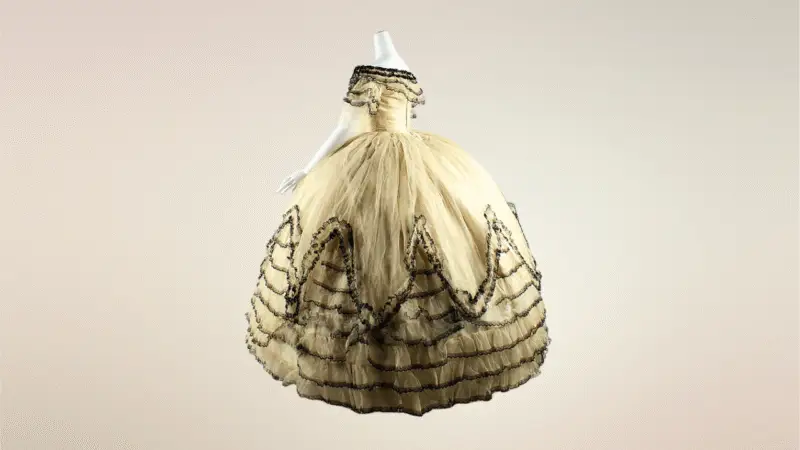
When and where was this item first created, and what practical purpose did it serve?
Ball gowns emerged in European royal courts during the Renaissance but reached their defining form in the 1860s. The elaborate evening dress served multiple practical purposes beyond dancing. These gowns demonstrated family wealth and social position through expensive materials and intricate construction.
Court protocols required specific dress codes for formal occasions, making ball gowns essential for political networking and marriage negotiations. The wide skirts created physical distance between wearers, reinforcing class distinctions and proper behavior. French court influence spread the style across European nobility, then to American high society.
The Industrial Revolution made luxury fabrics more accessible to wealthy merchants, expanding the market beyond aristocracy. Ball gowns functioned as wearable architecture, transforming women into living displays of family prosperity. The formal structure required specific movement patterns, teaching deportment and grace.
These garments literally shaped social interactions by dictating how women could sit, walk, and dance. The evening timing allowed for maximum fabric display under candlelight, showcasing expensive silk’s luminous qualities. Ball gowns represented the pinnacle of feminine formal dress in hierarchical societies.
Court protocols required specific dress codes for formal occasions, making ball gowns essential for political networking and marriage negotiations. The wide skirts created physical distance between wearers, reinforcing class distinctions and proper behavior. French court influence spread the style across European nobility, then to American high society.
The Industrial Revolution made luxury fabrics more accessible to wealthy merchants, expanding the market beyond aristocracy. Ball gowns functioned as wearable architecture, transforming women into living displays of family prosperity. The formal structure required specific movement patterns, teaching deportment and grace.
These garments literally shaped social interactions by dictating how women could sit, walk, and dance. The evening timing allowed for maximum fabric display under candlelight, showcasing expensive silk’s luminous qualities. Ball gowns represented the pinnacle of feminine formal dress in hierarchical societies.
What are the key design features and construction methods of this item?
Ball gowns featured floor-length skirts supported by crinolines or bustles, creating dramatic silhouettes. Fitted bodices emphasized tiny waists through boning and tight lacing. Low necklines displayed décolletage while short sleeves or off-shoulder designs revealed arms and shoulders.
Construction required multiple layers including chemise, corset, crinoline, and petticoats underneath the outer gown. Professional seamstresses spent weeks hand-sewing each garment using techniques like French seams and couture finishing. Fabrics included silk taffeta, satin, velvet, and brocade, often embellished with lace, embroidery, or beadwork.
Colors varied from pale pastels for young unmarried women to richer jewel tones for matrons. Trains added formality and required careful management while dancing. Boning in bodices created structured support without visible undergarments showing.
Sleeves attached separately allowed for easier alterations and cleaning. Hidden hooks, eyes, and buttons provided closure along back seams. Expensive trims like Valenciennes lace, seed pearls, and silk flowers decorated necklines and hemlines.
Construction required multiple layers including chemise, corset, crinoline, and petticoats underneath the outer gown. Professional seamstresses spent weeks hand-sewing each garment using techniques like French seams and couture finishing. Fabrics included silk taffeta, satin, velvet, and brocade, often embellished with lace, embroidery, or beadwork.
Colors varied from pale pastels for young unmarried women to richer jewel tones for matrons. Trains added formality and required careful management while dancing. Boning in bodices created structured support without visible undergarments showing.
Sleeves attached separately allowed for easier alterations and cleaning. Hidden hooks, eyes, and buttons provided closure along back seams. Expensive trims like Valenciennes lace, seed pearls, and silk flowers decorated necklines and hemlines.
What cultural movements and social contexts featured this item?
Ball gowns dominated Romantic movement social culture, emphasizing emotion, beauty, and idealized femininity. Wealthy families used elaborate balls to arrange advantageous marriages and display social connections. The 1860s marked the height of crinoline fashion, with skirts reaching maximum circumference.
Empress Eugénie of France set international style standards through her magnificent ball gown collection. American Civil War ironically created demand for escapist luxury among Northern society families. European immigration brought court traditions to American cities like New York and Philadelphia.
The California Gold Rush created new wealth that demanded social legitimacy through proper dress. Ball gowns appeared in emerging department store displays, democratizing fashion awareness. Photography studios captured formal portraits of families in their finest evening wear.
Women’s magazines like Godey’s Lady’s Book spread ball gown fashion nationwide through illustrated plates. International exhibitions showcased the finest examples of national dress traditions. The Romantic movement celebrated individual expression within established social frameworks.
Dance instruction became essential education for proper society participation. Ball gowns represented the last era before industrial fashion changed luxury clothing production forever.
Empress Eugénie of France set international style standards through her magnificent ball gown collection. American Civil War ironically created demand for escapist luxury among Northern society families. European immigration brought court traditions to American cities like New York and Philadelphia.
The California Gold Rush created new wealth that demanded social legitimacy through proper dress. Ball gowns appeared in emerging department store displays, democratizing fashion awareness. Photography studios captured formal portraits of families in their finest evening wear.
Women’s magazines like Godey’s Lady’s Book spread ball gown fashion nationwide through illustrated plates. International exhibitions showcased the finest examples of national dress traditions. The Romantic movement celebrated individual expression within established social frameworks.
Dance instruction became essential education for proper society participation. Ball gowns represented the last era before industrial fashion changed luxury clothing production forever.
Is this item still produced today, and how has it evolved over time?
Contemporary designers continue creating ball gowns but construction methods have evolved significantly. Modern versions substitute synthetic materials and machine construction for historical hand-sewing techniques. Contemporary ball gowns appear at charity galas, debutante balls, and formal state occasions.
High-end fashion houses like Valentino and Oscar de la Renta maintain traditional silhouettes with updated materials. Bridal wear adopted ball gown elements, creating the popular princess-style wedding dress. Prom dresses reflect democratized ball gown aesthetics for teenage formal events.
Historical accuracy movements encourage reproduction ball gowns for reenactment events and period films. Modern construction uses lightweight synthetic boning instead of whale bone or steel. Zipper closures replace complex hook and eye systems for easier dressing.
Machine embroidery and synthetic lace reduce costs compared to historical handwork. Contemporary ball gowns often feature shorter trains or detachable elements for practicality. Fashion schools teach historical construction techniques for costume and couture applications.
Vintage ball gowns survive in museum collections and private estate sales. The silhouette influences red carpet fashion and formal evening wear design. Modern interpretations balance historical romance with contemporary lifestyle demands requiring greater mobility and comfort.
High-end fashion houses like Valentino and Oscar de la Renta maintain traditional silhouettes with updated materials. Bridal wear adopted ball gown elements, creating the popular princess-style wedding dress. Prom dresses reflect democratized ball gown aesthetics for teenage formal events.
Historical accuracy movements encourage reproduction ball gowns for reenactment events and period films. Modern construction uses lightweight synthetic boning instead of whale bone or steel. Zipper closures replace complex hook and eye systems for easier dressing.
Machine embroidery and synthetic lace reduce costs compared to historical handwork. Contemporary ball gowns often feature shorter trains or detachable elements for practicality. Fashion schools teach historical construction techniques for costume and couture applications.
Vintage ball gowns survive in museum collections and private estate sales. The silhouette influences red carpet fashion and formal evening wear design. Modern interpretations balance historical romance with contemporary lifestyle demands requiring greater mobility and comfort.
How do you identify authentic vintage versions of this item?
Authentic 1860s ball gowns feature silk fabrics that feel substantial and rustle distinctively when moved. Original construction shows entirely hand-sewn seams with silk thread matching the fabric color exactly. Genuine whale bone or steel boning appears in bodice construction, never plastic substitutes.
Historical pieces display natural aging with fabric color fading uniformly and silk developing characteristic crackling sounds. Original ball gowns measure much smaller than modern sizes, reflecting 19th-century corseted proportions and dietary differences. Authentic examples show construction techniques like French seams, hand-finished hems, and individually attached trim elements.
Period hardware includes metal hooks and eyes, silk-covered buttons, and hand-sewn buttonholes with visible thread work. Original labels rarely exist, but construction details reveal period-appropriate dressmaking methods. Authentic pieces show wear patterns consistent with crinoline use, including hem abrasion and underarm discoloration from corseting.
Historical ball gowns feature natural fiber construction throughout, including silk or cotton thread and linen interfacings. Authentic aging creates specific fabric deterioration patterns including silk shattering along stress points. Genuine pieces demonstrate the weight and structure needed for proper draping over period undergarments like crinolines and bustles.
Historical pieces display natural aging with fabric color fading uniformly and silk developing characteristic crackling sounds. Original ball gowns measure much smaller than modern sizes, reflecting 19th-century corseted proportions and dietary differences. Authentic examples show construction techniques like French seams, hand-finished hems, and individually attached trim elements.
Period hardware includes metal hooks and eyes, silk-covered buttons, and hand-sewn buttonholes with visible thread work. Original labels rarely exist, but construction details reveal period-appropriate dressmaking methods. Authentic pieces show wear patterns consistent with crinoline use, including hem abrasion and underarm discoloration from corseting.
Historical ball gowns feature natural fiber construction throughout, including silk or cotton thread and linen interfacings. Authentic aging creates specific fabric deterioration patterns including silk shattering along stress points. Genuine pieces demonstrate the weight and structure needed for proper draping over period undergarments like crinolines and bustles.