
Bandage dress
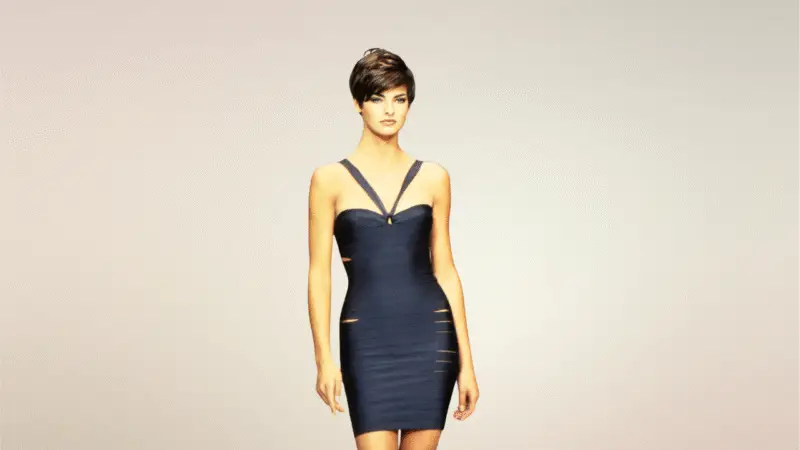
When and where was this item first created, and what practical purpose did it serve?
The bandage dress emerged in 1985 when French designer Hervé Léger created the first versions for his couture house. Léger developed this revolutionary garment to solve a specific problem in high fashion: creating figure-hugging silhouettes without traditional corseting or structured undergarments. The dress served a dual purpose as both evening wear and a form of architectural clothing sculpture.
Léger drew inspiration from medical bandages and compression garments used in physical therapy, translating their supportive properties into luxury fashion. The original concept aimed to create a second skin effect that would enhance and sculpt the female form through strategic tension and support. Early versions were exclusively handmade in Léger’s Paris atelier using techniques borrowed from orthopedic textile manufacturing.
The dress represented a radical departure from the loose, flowing silhouettes popular in early 1980s fashion. Léger’s innovation lay in understanding how calculated compression could replace traditional foundation garments while creating an entirely new aesthetic vocabulary for evening wear.
Léger drew inspiration from medical bandages and compression garments used in physical therapy, translating their supportive properties into luxury fashion. The original concept aimed to create a second skin effect that would enhance and sculpt the female form through strategic tension and support. Early versions were exclusively handmade in Léger’s Paris atelier using techniques borrowed from orthopedic textile manufacturing.
The dress represented a radical departure from the loose, flowing silhouettes popular in early 1980s fashion. Léger’s innovation lay in understanding how calculated compression could replace traditional foundation garments while creating an entirely new aesthetic vocabulary for evening wear.
What are the key design features and construction methods of this item?
The bandage dress features hundreds of individual stretch fabric strips sewn together in a precise overlapping pattern that creates compression zones across the body. Construction begins with a foundation garment cut to exact measurements, over which narrow strips of rayon-elastane blend fabric are applied in calculated tension patterns. Each strip measures approximately one to two inches wide and is stretched to specific percentages before attachment.
The overlapping technique creates varying degrees of compression that sculpts different body areas while maintaining flexibility for movement. Traditional construction uses blind hem stitching to attach each strip, ensuring smooth surface texture without visible seam lines. The dress typically features a sleeveless design with strategically placed seams that follow natural body contours.
Advanced versions incorporate graduated compression, with tighter weaving around the waist and hips that gradually loosens toward the bust and hemline. Hardware elements include invisible back zippers and interior hook-and-eye closures for secure fit. The mathematical precision required in measuring, cutting, and applying each strip makes authentic construction extremely labor-intensive, requiring specialized training in tension calculations and body measurement.
The overlapping technique creates varying degrees of compression that sculpts different body areas while maintaining flexibility for movement. Traditional construction uses blind hem stitching to attach each strip, ensuring smooth surface texture without visible seam lines. The dress typically features a sleeveless design with strategically placed seams that follow natural body contours.
Advanced versions incorporate graduated compression, with tighter weaving around the waist and hips that gradually loosens toward the bust and hemline. Hardware elements include invisible back zippers and interior hook-and-eye closures for secure fit. The mathematical precision required in measuring, cutting, and applying each strip makes authentic construction extremely labor-intensive, requiring specialized training in tension calculations and body measurement.
What cultural movements and social contexts featured this item?
The bandage dress became the signature garment of 1980s power dressing and the emerging supermodel culture. Madonna popularized the style in her 1990 “Vogue” music video, cementing its association with confident female sexuality and artistic rebellion. The dress appeared prominently in the work of fashion photographers like Helmut Newton and Richard Avedon, who used its sculptural qualities to create iconic images of feminine power.
It became essential attire for the emerging club scene in cities like Paris, Milan, and New York, where its body-conscious silhouette matched the era’s celebration of physical fitness and bold self-expression. The garment transcended fashion to become a symbol of postfeminist ideals, representing women’s autonomy over their bodies and sexuality. High-profile appearances at film premieres and award ceremonies established the bandage dress as red carpet armor for celebrities seeking to project strength and sensuality.
It became essential attire for the emerging club scene in cities like Paris, Milan, and New York, where its body-conscious silhouette matched the era’s celebration of physical fitness and bold self-expression. The garment transcended fashion to become a symbol of postfeminist ideals, representing women’s autonomy over their bodies and sexuality. High-profile appearances at film premieres and award ceremonies established the bandage dress as red carpet armor for celebrities seeking to project strength and sensuality.
Is this item still produced today, and how has it evolved over time?
Contemporary fashion houses continue producing bandage dresses, though most modern versions use updated materials and construction techniques. Current iterations often incorporate four-way stretch fabrics and laser-cut precision that replaces hand-sewing methods. Brands like Balmain, Alexander Wang, and countless contemporary labels have created their interpretations, often at significantly lower price points than original Léger pieces.
Modern bandage dresses frequently feature bold colors, metallic finishes, and decorative elements that depart from the minimalist aesthetic of 1980s originals. The silhouette has evolved to include variations like bandage skirts, tops, and even casual day wear versions made from lighter-weight materials. Fast fashion retailers have mass-produced simplified versions, though these typically lack the precise engineering and quality materials of authentic pieces.
The style experiences cyclical revivals, particularly during periods when body-conscious fashion trends dominate. Social media influence has driven renewed interest among younger consumers who discover vintage pieces through celebrity styling and fashion retrospectives. Contemporary designers often reference bandage construction techniques in creating modern structured garments.
Modern bandage dresses frequently feature bold colors, metallic finishes, and decorative elements that depart from the minimalist aesthetic of 1980s originals. The silhouette has evolved to include variations like bandage skirts, tops, and even casual day wear versions made from lighter-weight materials. Fast fashion retailers have mass-produced simplified versions, though these typically lack the precise engineering and quality materials of authentic pieces.
The style experiences cyclical revivals, particularly during periods when body-conscious fashion trends dominate. Social media influence has driven renewed interest among younger consumers who discover vintage pieces through celebrity styling and fashion retrospectives. Contemporary designers often reference bandage construction techniques in creating modern structured garments.
How do you identify authentic vintage versions of this item?
Authentic vintage bandage dresses from the 1980s and early 1990s feature heavy-weight rayon-elastane blend fabrics with substantial stretch recovery and distinctive texture. Original Hervé Léger pieces display precise hand-stitching with consistent tension patterns and flawless strip alignment that creates perfectly smooth surface texture. Examine the interior construction for French seam finishing and high-quality invisible zippers with substantial metal hardware.
Authentic pieces show characteristic aging patterns including slight color fading along stress points and minimal pilling despite decades of wear. Original labels feature Hervé Léger Paris markings with specific font styles and label placement that changed throughout production periods. The weight distribution feels substantial and architectural, unlike lightweight modern reproductions that lack proper compression engineering.
Authentic vintage pieces maintain their shape when hung, showing minimal stretching or sagging from gravity. Construction quality includes reinforced stress points at armholes and hemlines with doubled fabric layers. Original hardware includes covered hook-and-eye closures and zipper pulls that match fabric colors exactly.
Authentic pieces show characteristic aging patterns including slight color fading along stress points and minimal pilling despite decades of wear. Original labels feature Hervé Léger Paris markings with specific font styles and label placement that changed throughout production periods. The weight distribution feels substantial and architectural, unlike lightweight modern reproductions that lack proper compression engineering.
Authentic vintage pieces maintain their shape when hung, showing minimal stretching or sagging from gravity. Construction quality includes reinforced stress points at armholes and hemlines with doubled fabric layers. Original hardware includes covered hook-and-eye closures and zipper pulls that match fabric colors exactly.