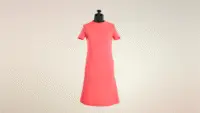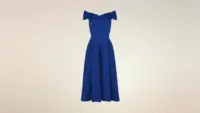
Dropped waist dress

When and where was this item first created, and what practical purpose did it serve?
The dropped waist dress emerged in Paris around 1920, revolutionary in its rejection of the corseted silhouette that had dominated women’s fashion for centuries. French designer Paul Poiret pioneered early versions before World War I, but Gabrielle “Coco” Chanel perfected the style that would define the decade. The dress served multiple practical purposes beyond mere fashion.
It liberated women from restrictive corsetry, allowing unprecedented freedom of movement essential for the era’s new activities like driving automobiles, playing tennis, and dancing the Charleston. The loose-fitting design accommodated the boyish figure that became fashionable as women entered the workforce in greater numbers. Unlike previous styles that emphasized the natural waist, this revolutionary silhouette positioned the waistline at hip level, creating a straight, columnar shape that reflected the machine age’s geometric aesthetic.
The design also proved economical to produce and comfortable to wear, making it accessible to working women who needed practical clothing. This democratization of fashion marked a significant departure from elaborate, class-specific Victorian dress codes.
It liberated women from restrictive corsetry, allowing unprecedented freedom of movement essential for the era’s new activities like driving automobiles, playing tennis, and dancing the Charleston. The loose-fitting design accommodated the boyish figure that became fashionable as women entered the workforce in greater numbers. Unlike previous styles that emphasized the natural waist, this revolutionary silhouette positioned the waistline at hip level, creating a straight, columnar shape that reflected the machine age’s geometric aesthetic.
The design also proved economical to produce and comfortable to wear, making it accessible to working women who needed practical clothing. This democratization of fashion marked a significant departure from elaborate, class-specific Victorian dress codes.
What are the key design features and construction methods of this item?
The dropped waist dress features a distinctive low waistline positioned at the hip bone rather than the natural waist, creating a straight, tubular silhouette from shoulders to hemline. The bodice hangs loosely from the shoulders without fitted shaping, often constructed with minimal seaming to achieve the desired fluid drape. Sleeves, when present, were typically loose and unfitted, ranging from cap sleeves to three-quarter length.
The skirt portion attached at the dropped waist point was usually straight or A-line, hitting at knee length or just below. Construction methods emphasized simplicity and comfort. Dresses were often cut on the bias to enhance drape and movement, a technique Madeleine Vionnet perfected during this period.
Common fabrics included crepe de chine, jersey, silk, and lightweight wools that would hang properly without structured support. Decorative elements concentrated at the dropped waist with sashes, belts, or ornamental bands. Necklines varied from high crew necks to deep V-necks, often featuring Art Deco inspired geometric beading or embroidery that emphasized the dress’s linear aesthetic rather than feminine curves.
The skirt portion attached at the dropped waist point was usually straight or A-line, hitting at knee length or just below. Construction methods emphasized simplicity and comfort. Dresses were often cut on the bias to enhance drape and movement, a technique Madeleine Vionnet perfected during this period.
Common fabrics included crepe de chine, jersey, silk, and lightweight wools that would hang properly without structured support. Decorative elements concentrated at the dropped waist with sashes, belts, or ornamental bands. Necklines varied from high crew necks to deep V-necks, often featuring Art Deco inspired geometric beading or embroidery that emphasized the dress’s linear aesthetic rather than feminine curves.
What cultural movements and social contexts featured this item?
The dropped waist dress became the uniform of the “New Woman” movement, symbolizing female emancipation and rejection of Victorian constraints. Flappers adopted this style as their signature look, wearing it to speakeasies, jazz clubs, and dance halls where its loose fit allowed for energetic dancing. The dress represented a radical shift in women’s roles during the Roaring Twenties, when women gained the right to vote, entered professional careers, and embraced social freedoms previously denied to them.
Hollywood stars like Louise Brooks and Joan Crawford popularized the style internationally through silent films, making it synonymous with modern sophistication. The fashion reflected broader cultural movements including Art Deco design principles, which emphasized geometric forms and streamlined aesthetics. Jazz Age culture celebrated youth and rebellion against traditional values, and the dropped waist dress embodied this spirit through its deliberate departure from feminine silhouettes.
European avant-garde movements influenced the style’s minimalist approach. The dress also reflected post-war optimism and economic prosperity that allowed women to participate more fully in public life and consumer culture.
Hollywood stars like Louise Brooks and Joan Crawford popularized the style internationally through silent films, making it synonymous with modern sophistication. The fashion reflected broader cultural movements including Art Deco design principles, which emphasized geometric forms and streamlined aesthetics. Jazz Age culture celebrated youth and rebellion against traditional values, and the dropped waist dress embodied this spirit through its deliberate departure from feminine silhouettes.
European avant-garde movements influenced the style’s minimalist approach. The dress also reflected post-war optimism and economic prosperity that allowed women to participate more fully in public life and consumer culture.
Is this item still produced today, and how has it evolved over time?
Contemporary designers regularly revisit the dropped waist silhouette, though modern interpretations differ significantly from 1920s originals. Today’s versions often incorporate stretch fabrics unknown in the original era and feature updated proportions that reflect current body ideals. High-end fashion houses like Chanel continue to reference their founder’s iconic designs in seasonal collections, while fast fashion retailers produce affordable interpretations.
Modern dropped waist dresses frequently blend the historical silhouette with contemporary elements such as bold prints, mixed textures, or asymmetrical hemlines. The style experiences periodic revivals, notably during the 1960s mod movement and again in the 1990s grunge era. Current productions typically use synthetic blends or modern natural fiber blends that provide easier care than the delicate silks and crepes of the original era.
Contemporary fashion often shortens the length to mini dress proportions or extends it to maxi length, departing from the original knee-length standard. The loose, comfortable fit continues to appeal to modern women seeking alternatives to body-conscious silhouettes, ensuring the style’s ongoing relevance in contemporary wardrobes.
Modern dropped waist dresses frequently blend the historical silhouette with contemporary elements such as bold prints, mixed textures, or asymmetrical hemlines. The style experiences periodic revivals, notably during the 1960s mod movement and again in the 1990s grunge era. Current productions typically use synthetic blends or modern natural fiber blends that provide easier care than the delicate silks and crepes of the original era.
Contemporary fashion often shortens the length to mini dress proportions or extends it to maxi length, departing from the original knee-length standard. The loose, comfortable fit continues to appeal to modern women seeking alternatives to body-conscious silhouettes, ensuring the style’s ongoing relevance in contemporary wardrobes.
How do you identify authentic vintage versions of this item?
Authentic 1920s dropped waist dresses exhibit specific construction and material characteristics distinct from modern reproductions. Original pieces feature hand-finished seams, often with French seams or pinked edges rather than serged finishes. Period fabrics include silk crepe de chine, silk jersey, silk georgette, and fine wool crepe that develop a distinctive soft hand and subtle sheen with age.
Authentic pieces show characteristic aging patterns including silk splitting along stress points, particularly at the underarms and dropped waist seam. Original beadwork uses glass beads sewn with silk thread that may show darkening or loosening over time. Labels from the era are typically small, often hand-sewn, and may include Paris couture house names or department store labels like Saks Fifth Avenue or Lord & Taylor.
Construction methods include bias-cut panels that require careful examination to verify period-appropriate cutting techniques. Hardware such as snaps or hooks should be appropriate to the 1920s, avoiding modern plastic components. Proportions are crucial for authentication as original dresses were sized for the smaller frames and shorter average heights of 1920s women, resulting in narrower shoulders and shorter overall lengths compared to modern interpretations.
Authentic pieces show characteristic aging patterns including silk splitting along stress points, particularly at the underarms and dropped waist seam. Original beadwork uses glass beads sewn with silk thread that may show darkening or loosening over time. Labels from the era are typically small, often hand-sewn, and may include Paris couture house names or department store labels like Saks Fifth Avenue or Lord & Taylor.
Construction methods include bias-cut panels that require careful examination to verify period-appropriate cutting techniques. Hardware such as snaps or hooks should be appropriate to the 1920s, avoiding modern plastic components. Proportions are crucial for authentication as original dresses were sized for the smaller frames and shorter average heights of 1920s women, resulting in narrower shoulders and shorter overall lengths compared to modern interpretations.