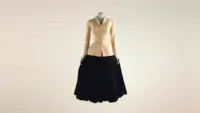
Siren suit

When and where was this item first created, and what practical purpose did it serve?
The siren suit was created in Britain during World War II as a practical garment for civilians during air raid alerts. Winston Churchill popularized this one-piece jumpsuit after adopting it as his preferred attire during wartime emergencies. The suit solved the urgent need for quickly donnable clothing that could be worn over nightwear or undergarments when rushing to air raid shelters.
British manufacturers began mass-producing these suits in 1939 after the government encouraged civilians to prepare for extended periods in bomb shelters. The design drew inspiration from military flight suits and industrial work coveralls, adapting their functional approach for civilian emergency use. Churchill’s personal siren suits were tailored by his Savile Row clothiers, elevating the garment’s status beyond mere utility wear.
The name referenced air raid sirens, emphasizing the suit’s primary purpose as rapid-response shelter clothing. These suits became essential household items across Britain, with department stores like Harrods and Selfridges featuring them prominently in their wartime collections.
British manufacturers began mass-producing these suits in 1939 after the government encouraged civilians to prepare for extended periods in bomb shelters. The design drew inspiration from military flight suits and industrial work coveralls, adapting their functional approach for civilian emergency use. Churchill’s personal siren suits were tailored by his Savile Row clothiers, elevating the garment’s status beyond mere utility wear.
The name referenced air raid sirens, emphasizing the suit’s primary purpose as rapid-response shelter clothing. These suits became essential household items across Britain, with department stores like Harrods and Selfridges featuring them prominently in their wartime collections.
What are the key design features and construction methods of this item?
Siren suits featured a simple one-piece construction with a full-length front zipper extending from neck to crotch for maximum speed when dressing. The garments typically included a detachable or fold-down hood to protect the head and hair during shelter stays. Most suits incorporated large patch pockets on the chest and thighs for carrying essential items like identification papers, money, and small personal effects.
The loose-fitting design accommodated multiple layers underneath, allowing wearers to add warmth over nightclothes or regular clothing. Ankle cuffs and wrist cuffs prevented drafts and debris from entering the garment during emergency situations. Many versions included a built-in belt or drawstring waist for improved fit and warmth retention.
The collar could typically be turned up and secured for additional neck protection. Construction emphasized durability over fashion, with reinforced stress points at knees, elbows, and pocket corners. Some luxury versions featured fur linings or detachable warm linings for extended shelter stays.
The loose-fitting design accommodated multiple layers underneath, allowing wearers to add warmth over nightclothes or regular clothing. Ankle cuffs and wrist cuffs prevented drafts and debris from entering the garment during emergency situations. Many versions included a built-in belt or drawstring waist for improved fit and warmth retention.
The collar could typically be turned up and secured for additional neck protection. Construction emphasized durability over fashion, with reinforced stress points at knees, elbows, and pocket corners. Some luxury versions featured fur linings or detachable warm linings for extended shelter stays.
What cultural movements and social contexts featured this item?
The siren suit embodied Britain’s wartime spirit of practical resilience and democratic equality during the Blitz. Churchill’s adoption of the garment transformed it from working-class utility wear into a symbol of shared sacrifice across social classes. The suit represented the breakdown of traditional dress codes as survival took precedence over social conventions.
British propaganda often featured families in siren suits to normalize emergency preparedness and demonstrate national unity. The garment appeared in wartime fashion magazines as editors promoted practical dressing for uncertain times. Department stores marketed siren suits to middle-class customers as patriotic purchases supporting the war effort.
The suits became associated with the stoic British character, embodying the nation’s determination to maintain daily routines despite constant threat. Women’s versions challenged traditional feminine dress codes by adopting masculine silhouettes for practical reasons. The garment reflected wartime material restrictions, using minimal fabric while maximizing functionality.
Post-war, siren suits symbolized the era’s temporary suspension of peacetime social norms. They represented a unique moment when utility superseded vanity in British fashion consciousness, creating lasting cultural memory of wartime solidarity.
British propaganda often featured families in siren suits to normalize emergency preparedness and demonstrate national unity. The garment appeared in wartime fashion magazines as editors promoted practical dressing for uncertain times. Department stores marketed siren suits to middle-class customers as patriotic purchases supporting the war effort.
The suits became associated with the stoic British character, embodying the nation’s determination to maintain daily routines despite constant threat. Women’s versions challenged traditional feminine dress codes by adopting masculine silhouettes for practical reasons. The garment reflected wartime material restrictions, using minimal fabric while maximizing functionality.
Post-war, siren suits symbolized the era’s temporary suspension of peacetime social norms. They represented a unique moment when utility superseded vanity in British fashion consciousness, creating lasting cultural memory of wartime solidarity.
Is this item still produced today, and how has it evolved over time?
Siren suits disappeared from mainstream production after World War II ended, though some manufacturers briefly continued making them for industrial workers. The garment’s association with wartime hardship made it undesirable during post-war recovery when consumers eagerly embraced pre-war fashion norms. Christian Dior’s New Look in 1947 deliberately countered the siren suit’s utilitarian aesthetic with feminine luxury and fabric abundance.
Some Cold War civil defense programs in the 1950s recommended similar one-piece emergency clothing, but these never achieved widespread adoption. The jumpsuit’s basic concept evolved into 1960s fashion through designers who stripped away wartime associations while retaining the one-piece convenience. Contemporary fashion occasionally references siren suits in collections exploring wartime fashion or utilitarian aesthetics.
Modern survival gear companies produce emergency clothing with similar quick-donning features for disaster preparedness. The garment influenced post-war workwear design, contributing to the development of coveralls and industrial uniforms. Fashion historians recognize siren suits as precursors to later jumpsuit trends that emphasized practicality and gender-neutral design.
Some Cold War civil defense programs in the 1950s recommended similar one-piece emergency clothing, but these never achieved widespread adoption. The jumpsuit’s basic concept evolved into 1960s fashion through designers who stripped away wartime associations while retaining the one-piece convenience. Contemporary fashion occasionally references siren suits in collections exploring wartime fashion or utilitarian aesthetics.
Modern survival gear companies produce emergency clothing with similar quick-donning features for disaster preparedness. The garment influenced post-war workwear design, contributing to the development of coveralls and industrial uniforms. Fashion historians recognize siren suits as precursors to later jumpsuit trends that emphasized practicality and gender-neutral design.
How do you identify authentic vintage versions of this item?
Authentic wartime siren suits were constructed from wool, cotton twill, or wool blends in navy blue, dark green, or brown colors that wouldn’t show dirt during shelter stays. Original fabrics feel substantial and tightly woven, reflecting wartime quality standards despite material shortages. Genuine suits feature heavy-duty metal zippers, typically brass or nickel-plated steel, with distinctive large pull tabs for easy operation in darkness.
Period construction shows French seams or flat-felled seams for durability, with visible topstitching in matching thread colors. Authentic examples display utility-grade button reinforcement at stress points and bar tacks at pocket corners. Original labels should reference British manufacturers like Jaeger, Burberry, or department stores that contracted wartime production.
Genuine aging patterns include fabric softening, color fading at fold lines, and zipper wear consistent with frequent emergency use. Reproduction suits often use modern synthetic fabrics, lightweight zippers, or contemporary construction techniques like serged seams. Authentic proportions reflect 1940s sizing standards with generous ease through the torso and appropriate period sleeve and leg lengths.
Period construction shows French seams or flat-felled seams for durability, with visible topstitching in matching thread colors. Authentic examples display utility-grade button reinforcement at stress points and bar tacks at pocket corners. Original labels should reference British manufacturers like Jaeger, Burberry, or department stores that contracted wartime production.
Genuine aging patterns include fabric softening, color fading at fold lines, and zipper wear consistent with frequent emergency use. Reproduction suits often use modern synthetic fabrics, lightweight zippers, or contemporary construction techniques like serged seams. Authentic proportions reflect 1940s sizing standards with generous ease through the torso and appropriate period sleeve and leg lengths.