Ankle boots
When and where was this item first created, and what practical purpose did it serve?
Ankle boots emerged in the early 1800s as practical footwear for Victorian women who needed protection from muddy streets while maintaining feminine silhouettes. Originally called “walking boots,” they provided ankle support for ladies navigating unpaved roads and uneven cobblestones. These early versions featured button closures up the side and were crafted from sturdy leather to withstand daily wear.
The design solved a crucial problem for active women who required more protection than delicate slippers offered but wanted to avoid the masculine appearance of tall riding boots. Military influence shaped early ankle boot construction, borrowing reinforced toe caps and durable sole attachment methods from cavalry boots. By the 1840s, elastic side panels revolutionized the design, creating the Chelsea boot silhouette that would endure for centuries.
Victorian bootmakers developed specialized lasts to create the narrow, pointed toe shape that complemented full skirts. These boots became essential wardrobe items for middle-class women, representing both practicality and respectability in an era when proper footwear indicated social status.
The design solved a crucial problem for active women who required more protection than delicate slippers offered but wanted to avoid the masculine appearance of tall riding boots. Military influence shaped early ankle boot construction, borrowing reinforced toe caps and durable sole attachment methods from cavalry boots. By the 1840s, elastic side panels revolutionized the design, creating the Chelsea boot silhouette that would endure for centuries.
Victorian bootmakers developed specialized lasts to create the narrow, pointed toe shape that complemented full skirts. These boots became essential wardrobe items for middle-class women, representing both practicality and respectability in an era when proper footwear indicated social status.
What are the key design features and construction methods of this item?
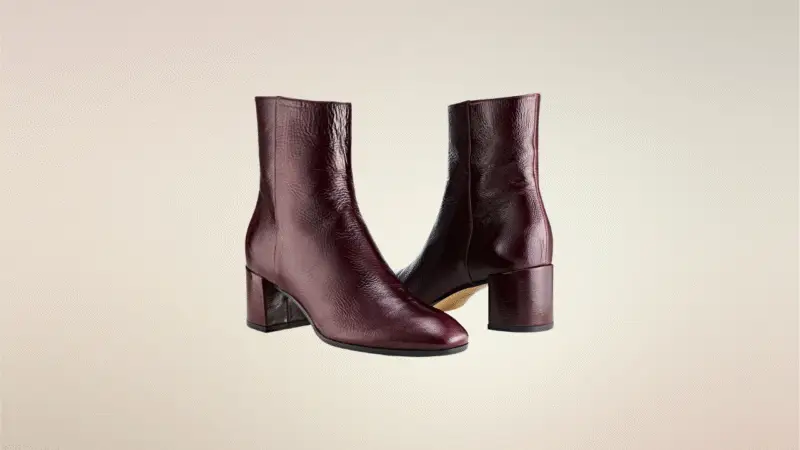
Ankle boots feature a shaft height that extends just above the ankle bone, typically measuring 4 to 6 inches from the sole. The classic construction employs a closed lacing system with 4 to 6 eyelets, though slip-on varieties with elastic side gores became equally popular. Traditional ankle boots use Goodyear welt construction, where the upper leather is sewn to a leather welt that connects to the sole, creating waterproof durability.
The toe box varies from sharply pointed Victorian styles to rounded modern interpretations, with Cuban heels measuring 1. 5 to 2. 5 inches providing both height and stability.
Quality vintage examples showcase hand-stitched details including decorative perforation patterns called broguing, contrast stitching along seams, and reinforced stress points at the heel counter. Leather uppers typically feature full-grain cowhide, kidskin, or patent leather, with softer leathers requiring internal canvas or leather backing for structure. Metal hardware includes brass or steel eyelets, decorative buckles, and reinforcement plates at high-wear areas.
The toe box varies from sharply pointed Victorian styles to rounded modern interpretations, with Cuban heels measuring 1. 5 to 2. 5 inches providing both height and stability.
Quality vintage examples showcase hand-stitched details including decorative perforation patterns called broguing, contrast stitching along seams, and reinforced stress points at the heel counter. Leather uppers typically feature full-grain cowhide, kidskin, or patent leather, with softer leathers requiring internal canvas or leather backing for structure. Metal hardware includes brass or steel eyelets, decorative buckles, and reinforcement plates at high-wear areas.
What cultural movements and social contexts featured this item?
The Swinging Sixties transformed ankle boots from practical Victorian footwear into symbols of youth rebellion and sexual liberation. Mod subculture adopted sleek, minimalist ankle boots as essential elements of their streamlined aesthetic, pairing them with mini skirts that scandalized conservative society. British designers like Mary Quant promoted ankle boots as part of the total mod look that rejected fussy, traditional styling.
The Beatles popularized pointed-toe ankle boots with Cuban heels, inspiring countless young men to abandon oxford shoes for more theatrical footwear. Fashion photographer David Bailey captured iconic images of models like Jean Shrimpton wearing ankle boots with shift dresses, creating visual associations between modern footwear and contemporary femininity. French designers including André Courrèges incorporated white ankle boots into futuristic collections that imagined space-age fashion.
The Chelsea boot variant gained popularity among both mods and rockers, creating rare common ground between rival youth tribes. Television shows like “The Avengers” featured Emma Peel in sleek ankle boots that represented female empowerment and professional competence. This decade established ankle boots as versatile fashion statements rather than purely functional footwear, setting the stage for their continued evolution.
The Beatles popularized pointed-toe ankle boots with Cuban heels, inspiring countless young men to abandon oxford shoes for more theatrical footwear. Fashion photographer David Bailey captured iconic images of models like Jean Shrimpton wearing ankle boots with shift dresses, creating visual associations between modern footwear and contemporary femininity. French designers including André Courrèges incorporated white ankle boots into futuristic collections that imagined space-age fashion.
The Chelsea boot variant gained popularity among both mods and rockers, creating rare common ground between rival youth tribes. Television shows like “The Avengers” featured Emma Peel in sleek ankle boots that represented female empowerment and professional competence. This decade established ankle boots as versatile fashion statements rather than purely functional footwear, setting the stage for their continued evolution.
Is this item still produced today, and how has it evolved over time?
Modern ankle boots have evolved far beyond their Victorian origins while maintaining core design principles that ensure their continued relevance. Contemporary versions range from minimalist Chelsea boots with streamlined profiles to heavily embellished statement pieces featuring studs, buckles, and decorative stitching. Luxury brands like Saint Laurent and Bottega Veneta produce high-end versions using premium Italian leather and traditional construction methods, while fast fashion retailers offer affordable interpretations in synthetic materials.
Today’s ankle boots accommodate diverse lifestyle needs, from waterproof versions for outdoor activities to lightweight options for urban commuting. The rise of sustainable fashion has sparked renewed interest in vintage and vintage-inspired ankle boots that offer durability over disposability. Technology has transformed construction methods, with some manufacturers using injection molding for soles and computerized cutting for precision fit.
However, traditional bootmaking techniques persist in artisanal workshops and heritage brands that maintain apprenticeship programs. Current trends include platform soles, architectural heel shapes, and hybrid designs that blur boundaries between boots and sneakers. The versatility that made ankle boots essential Victorian footwear continues to drive their popularity across age groups, genders, and style preferences in contemporary fashion.
Today’s ankle boots accommodate diverse lifestyle needs, from waterproof versions for outdoor activities to lightweight options for urban commuting. The rise of sustainable fashion has sparked renewed interest in vintage and vintage-inspired ankle boots that offer durability over disposability. Technology has transformed construction methods, with some manufacturers using injection molding for soles and computerized cutting for precision fit.
However, traditional bootmaking techniques persist in artisanal workshops and heritage brands that maintain apprenticeship programs. Current trends include platform soles, architectural heel shapes, and hybrid designs that blur boundaries between boots and sneakers. The versatility that made ankle boots essential Victorian footwear continues to drive their popularity across age groups, genders, and style preferences in contemporary fashion.
How do you identify authentic vintage versions of this item?
Authentic vintage ankle boots reveal their age through specific construction details and natural aging patterns that modern reproductions struggle to replicate perfectly. Genuine leather develops a distinctive patina over decades, showing wear patterns at stress points including the heel counter, toe box, and ankle opening. Original stitching uses cotton or linen thread that softens and slightly loosens with age, creating subtle texture differences from synthetic modern threads.
Period-appropriate hardware features solid brass or steel eyelets that develop natural oxidation patterns, while buckles show wear consistent with regular use rather than artificial distressing. Construction methods provide crucial authentication clues including hand-stitched welts, irregular stitch spacing that reflects human craftsmanship, and sole attachment methods specific to different manufacturing eras. Vintage boots often feature maker’s stamps pressed into the leather sole or heel, indicating specific manufacturers, production years, or quality grades.
The leather grain structure in authentic pieces shows natural variations and imperfections that machine-processed modern leather lacks. Interior labels may include union stamps, size markings in period-appropriate formats, or retailer information that can be verified through historical records. Weight differences distinguish vintage boots, as older construction methods typically produced heavier, more substantial footwear than contemporary mass production techniques.
Period-appropriate hardware features solid brass or steel eyelets that develop natural oxidation patterns, while buckles show wear consistent with regular use rather than artificial distressing. Construction methods provide crucial authentication clues including hand-stitched welts, irregular stitch spacing that reflects human craftsmanship, and sole attachment methods specific to different manufacturing eras. Vintage boots often feature maker’s stamps pressed into the leather sole or heel, indicating specific manufacturers, production years, or quality grades.
The leather grain structure in authentic pieces shows natural variations and imperfections that machine-processed modern leather lacks. Interior labels may include union stamps, size markings in period-appropriate formats, or retailer information that can be verified through historical records. Weight differences distinguish vintage boots, as older construction methods typically produced heavier, more substantial footwear than contemporary mass production techniques.