
Ascot
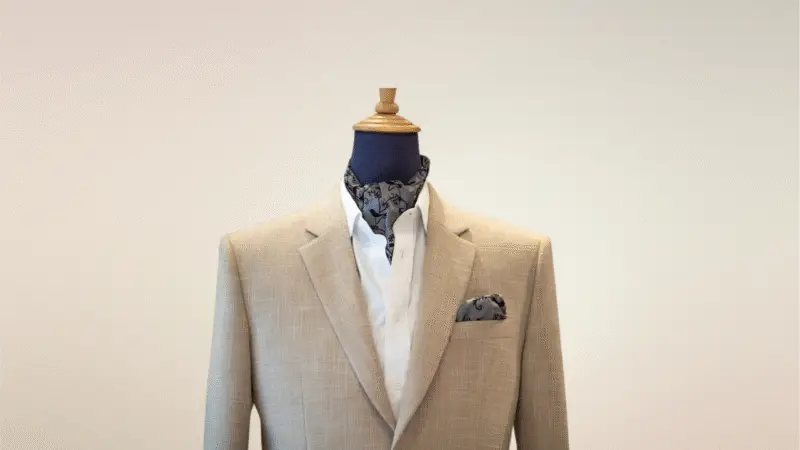
When and where was this item first created, and what practical purpose did it serve?
The ascot was born from necessity at England’s Royal Ascot races in 1711, where formal daywear demanded sophisticated neckwear that distinguished gentlemen from common laborers. Originally called a “day cravat,” this wide silk scarf evolved from military stock ties worn by cavalry officers who needed secure yet elegant neck protection during formal duties. The ascot solved a critical sartorial problem by bridging the gap between casual neckerchiefs and formal evening white ties.
Unlike narrow neckties that emerged later, ascots provided substantial coverage and visual weight appropriate for morning and afternoon occasions. The Royal Ascot races became the proving ground where this accessory gained social cachet, as wealthy spectators competed through increasingly elaborate neckwear displays. By the 1880s, the ascot had become essential equipment for any gentleman navigating London’s complex social hierarchy, serving both practical and symbolic functions in an era where clothing communicated precise social standing.
Unlike narrow neckties that emerged later, ascots provided substantial coverage and visual weight appropriate for morning and afternoon occasions. The Royal Ascot races became the proving ground where this accessory gained social cachet, as wealthy spectators competed through increasingly elaborate neckwear displays. By the 1880s, the ascot had become essential equipment for any gentleman navigating London’s complex social hierarchy, serving both practical and symbolic functions in an era where clothing communicated precise social standing.
What are the key design features and construction methods of this item?
The authentic Victorian ascot features a wide silk body measuring four to six inches across, constructed from heavyweight silk twill or satin that holds crisp folds without wilting. Traditional construction employs hand-rolled edges with silk thread matching the fabric color, creating subtle dimensional borders that distinguish quality pieces. The pointed ends extend twelve to fourteen inches from the neck knot, allowing proper draping over the waistcoat front.
Period ascots utilize dense silk weaves that support structured knotting while maintaining elegant drape throughout extended wear. Construction details include reinforced stress points at the neck area using additional silk backing, preventing tear-through during repeated knotting. Authentic examples feature symmetrical cutting that ensures balanced appearance when properly tied.
The silk weight ranges from twelve to sixteen momme, providing sufficient body for formal shaping while remaining comfortable against the neck. Hand-finished seaming appears throughout quality pieces, with French seams preventing fraying and maintaining clean interior lines. Color application uses period-appropriate dye processes that create subtle variations within single tones rather than modern uniform coloration.
Period ascots utilize dense silk weaves that support structured knotting while maintaining elegant drape throughout extended wear. Construction details include reinforced stress points at the neck area using additional silk backing, preventing tear-through during repeated knotting. Authentic examples feature symmetrical cutting that ensures balanced appearance when properly tied.
The silk weight ranges from twelve to sixteen momme, providing sufficient body for formal shaping while remaining comfortable against the neck. Hand-finished seaming appears throughout quality pieces, with French seams preventing fraying and maintaining clean interior lines. Color application uses period-appropriate dye processes that create subtle variations within single tones rather than modern uniform coloration.
What cultural movements and social contexts featured this item?
Victorian society embraced the ascot as essential formal daywear that reflected the era’s obsession with precise social distinctions and masculine refinement. The accessory became mandatory equipment for gentlemen attending morning social functions, business meetings, and cultural events throughout the 1880s and 1890s. Royal endorsement solidified the ascot’s position when Prince Albert Edward popularized elaborate silk versions at court functions, establishing the style as a marker of aristocratic taste.
The ascot represented Victorian ideals of controlled masculinity, where men expressed personality through subtle variations in color and pattern rather than radical fashion statements. Social reformers initially criticized ascots as symbols of idle aristocracy, but middle-class adoption transformed the accessory into a democratic symbol of aspiration and respectability. The Industrial Revolution enabled mass production of silk ascots, making formerly exclusive accessories available to emerging professional classes who used them to signal upward mobility.
The ascot represented Victorian ideals of controlled masculinity, where men expressed personality through subtle variations in color and pattern rather than radical fashion statements. Social reformers initially criticized ascots as symbols of idle aristocracy, but middle-class adoption transformed the accessory into a democratic symbol of aspiration and respectability. The Industrial Revolution enabled mass production of silk ascots, making formerly exclusive accessories available to emerging professional classes who used them to signal upward mobility.
Is this item still produced today, and how has it evolved over time?
Contemporary ascot production continues primarily through specialized haberdashers and costume suppliers, though modern versions rarely achieve the silk quality and construction standards of Victorian originals. Today’s ascots serve primarily ceremonial functions at formal daywear events, vintage-inspired weddings, and theatrical productions requiring period authenticity. Fashion houses occasionally revive ascot styles during formal menswear collections, but contemporary versions typically feature simplified construction and synthetic fiber blends that reduce manufacturing costs while compromising traditional drape and texture.
Modern ascots often incorporate elastic bands or pre-tied configurations that eliminate the skill requirements of traditional knotting techniques. The accessory maintains relevance in specific cultural contexts including equestrian sports, where traditional dress codes preserve ascot requirements for certain competitive categories. British formal events occasionally mandate ascot wear, particularly morning weddings and garden parties where historical precedent guides dress expectations.
Modern ascots often incorporate elastic bands or pre-tied configurations that eliminate the skill requirements of traditional knotting techniques. The accessory maintains relevance in specific cultural contexts including equestrian sports, where traditional dress codes preserve ascot requirements for certain competitive categories. British formal events occasionally mandate ascot wear, particularly morning weddings and garden parties where historical precedent guides dress expectations.
How do you identify authentic vintage versions of this item?
Authentic Victorian ascots display specific silk characteristics that immediately distinguish them from modern reproductions, beginning with heavyweight silk twill or satin that creates substantial hand-feel and natural drape resistance. Period pieces exhibit hand-rolled edges with matching silk thread that shows slight irregularities characteristic of nineteenth-century finishing techniques rather than machine-perfect modern seaming. Original ascots feature natural silk aging that creates subtle color variations and gentle fabric softening without the brittleness common in contemporary synthetic alternatives.
Authentic examples show wear patterns concentrated at folding points and neck contact areas, with gradual silk fiber breakdown that creates characteristic textural changes over decades of use. Period construction utilizes French seams throughout, visible only when examining interior finishing, with reinforcement stitching at stress points using period-appropriate silk thread weights. Original pieces bear no manufacturer labels, as Victorian haberdashers relied on reputation rather than branding, though some examples retain retailer stamps in discrete interior locations.
Authentic examples show wear patterns concentrated at folding points and neck contact areas, with gradual silk fiber breakdown that creates characteristic textural changes over decades of use. Period construction utilizes French seams throughout, visible only when examining interior finishing, with reinforcement stitching at stress points using period-appropriate silk thread weights. Original pieces bear no manufacturer labels, as Victorian haberdashers relied on reputation rather than branding, though some examples retain retailer stamps in discrete interior locations.
Related posts:
No related posts.