
Apron
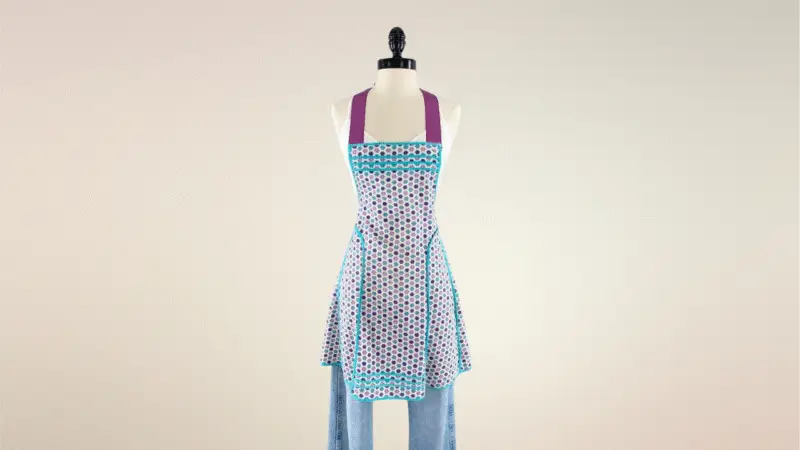
When and where was this item first created, and what practical purpose did it serve?
The apron emerged in ancient civilizations as a practical garment to protect clothing during work, with the earliest versions appearing in Egypt around 3000 BCE. European medieval aprons served dual purposes as protective wear for craftsmen and servants, while also functioning as makeshift carrying pouches for tools and goods. The garment’s name derives from the French “naperon,” meaning small tablecloth.
By the 15th century, aprons had become essential workwear across all social classes, from blacksmiths’ leather versions to housemaids’ linen coverings. Colonial American women transformed aprons into status symbols, with wealthy households featuring elaborate embroidered designs and fine fabrics. The Industrial Revolution standardized apron production, making them accessible to working-class families.
Victorian-era aprons evolved into decorative accessories, with parlor maids wearing pristine white versions as symbols of domestic order. During the Great Depression, resourceful homemakers created aprons from flour sacks, leading manufacturers to print attractive patterns on their packaging. This practical innovation demonstrates how economic necessity drove fashion innovation during challenging times.
By the 15th century, aprons had become essential workwear across all social classes, from blacksmiths’ leather versions to housemaids’ linen coverings. Colonial American women transformed aprons into status symbols, with wealthy households featuring elaborate embroidered designs and fine fabrics. The Industrial Revolution standardized apron production, making them accessible to working-class families.
Victorian-era aprons evolved into decorative accessories, with parlor maids wearing pristine white versions as symbols of domestic order. During the Great Depression, resourceful homemakers created aprons from flour sacks, leading manufacturers to print attractive patterns on their packaging. This practical innovation demonstrates how economic necessity drove fashion innovation during challenging times.
What are the key design features and construction methods of this item?
Authentic vintage aprons feature hand-finished seams with French or flat-felled construction, eliminating raw edges for durability during frequent washing. Traditional waist ties measure 30-36 inches long, allowing for secure knotting and comfortable fit across various body types. Bib aprons include a chest piece with neck straps, while half aprons cover only from waist to mid-thigh.
Pockets were strategically placed for functionality, typically measuring 6-8 inches square with reinforced corners and bar-tack stitching at stress points. Quality vintage examples showcase double-turned hems measuring 1-2 inches deep, creating weight and drape that prevents riding up during movement. Waistbands were cut on the bias or featured elastic inserts for comfortable wear during long work periods.
Construction details include reinforced attachment points where straps meet the main body, often featuring triangular reinforcement patches. Buttonholes were hand-worked or machine-stitched with dense, even stitching. Trim applications used coordinating thread colors and were applied before final assembly to ensure clean, professional finishing throughout the garment.
Pockets were strategically placed for functionality, typically measuring 6-8 inches square with reinforced corners and bar-tack stitching at stress points. Quality vintage examples showcase double-turned hems measuring 1-2 inches deep, creating weight and drape that prevents riding up during movement. Waistbands were cut on the bias or featured elastic inserts for comfortable wear during long work periods.
Construction details include reinforced attachment points where straps meet the main body, often featuring triangular reinforcement patches. Buttonholes were hand-worked or machine-stitched with dense, even stitching. Trim applications used coordinating thread colors and were applied before final assembly to ensure clean, professional finishing throughout the garment.
What cultural movements and social contexts featured this item?
World War II transformed aprons from domestic accessories into symbols of patriotic duty and resourceful homemaking. Victory gardens required practical outdoor aprons for harvesting and preserving, leading to darker colors and sturdier fabrics. Government rationing campaigns encouraged women to sew their own aprons from repurposed materials, creating a cottage industry of pattern sharing and fabric conservation techniques.
The feminist movement of the 1960s initially rejected aprons as symbols of domestic oppression, causing a dramatic decline in their popularity among younger generations. However, craft revival movements in the 1970s reclaimed aprons as expressions of domestic creativity and environmental consciousness. Restaurant and hospitality industries standardized professional aprons during this period, establishing safety regulations and uniform requirements that persist today.
Immigrant communities maintained traditional apron styles as cultural markers, with specific patterns identifying regional origins and family traditions. The counterculture movement embraced handmade aprons as rejection of mass-produced fashion, leading to renewed interest in traditional handicrafts and sustainable clothing practices.
The feminist movement of the 1960s initially rejected aprons as symbols of domestic oppression, causing a dramatic decline in their popularity among younger generations. However, craft revival movements in the 1970s reclaimed aprons as expressions of domestic creativity and environmental consciousness. Restaurant and hospitality industries standardized professional aprons during this period, establishing safety regulations and uniform requirements that persist today.
Immigrant communities maintained traditional apron styles as cultural markers, with specific patterns identifying regional origins and family traditions. The counterculture movement embraced handmade aprons as rejection of mass-produced fashion, leading to renewed interest in traditional handicrafts and sustainable clothing practices.
Is this item still produced today, and how has it evolved over time?
Modern apron production continues through both commercial manufacturers and artisan makers, though designs have evolved significantly from historical versions. Contemporary aprons incorporate moisture-wicking fabrics, stain-resistant treatments, and ergonomic design features unknown in vintage examples. Restaurant supply companies produce standardized versions with adjustable straps and reinforced stress points for commercial durability.
Craft and cooking enthusiasts have driven a resurgence in decorative aprons, with modern versions featuring bold graphics, novelty prints, and contemporary silhouettes. High-end kitchen retailers offer luxury aprons made from premium materials like Japanese denim and Italian canvas, targeting serious home cooks and professional chefs. Adjustable neck straps have largely replaced traditional tie closures for convenience and universal fit.
Modern construction techniques include heat-sealed seams, laser-cut edges, and industrial stitching methods that differ markedly from vintage hand-finishing. Environmental consciousness has sparked interest in organic cotton and recycled fabric aprons, though these materials age differently than historical textiles. Cross-back designs eliminate neck strain, representing a significant functional improvement over traditional straight-strap configurations.
Craft and cooking enthusiasts have driven a resurgence in decorative aprons, with modern versions featuring bold graphics, novelty prints, and contemporary silhouettes. High-end kitchen retailers offer luxury aprons made from premium materials like Japanese denim and Italian canvas, targeting serious home cooks and professional chefs. Adjustable neck straps have largely replaced traditional tie closures for convenience and universal fit.
Modern construction techniques include heat-sealed seams, laser-cut edges, and industrial stitching methods that differ markedly from vintage hand-finishing. Environmental consciousness has sparked interest in organic cotton and recycled fabric aprons, though these materials age differently than historical textiles. Cross-back designs eliminate neck strain, representing a significant functional improvement over traditional straight-strap configurations.
How do you identify authentic vintage versions of this item?
Authentic vintage aprons feature specific fabric characteristics including pure cotton, linen, or cotton-linen blends with natural aging patterns showing gradual yellowing and softening over decades. Original construction shows hand-finished details like rolled hems, hand-worked buttonholes, and bias-cut ties that create distinctive draping. Period-appropriate materials include flour sack cotton with visible weave irregularities, indicating pre-industrial fabric production methods.
Authentic wear patterns include fading along pocket edges, tie attachment points, and center front areas where hands repeatedly wiped. Original waist ties show fraying at tips and softening from repeated knotting, while reproduction ties remain stiff and uniform. Vintage labels, when present, feature hand-stamped or simple printed information rather than modern woven tags with care instructions.
Color retention in authentic pieces shows period-appropriate dye limitations, with blues and reds fading to distinctive muted tones impossible to replicate in modern production. Stitching irregularities from vintage sewing machines create subtle variations in seam lines, contrasting with perfectly uniform modern construction. Original hardware like snaps or buttons shows appropriate aging, tarnishing, or patina development that modern reproductions cannot match.
Authentic wear patterns include fading along pocket edges, tie attachment points, and center front areas where hands repeatedly wiped. Original waist ties show fraying at tips and softening from repeated knotting, while reproduction ties remain stiff and uniform. Vintage labels, when present, feature hand-stamped or simple printed information rather than modern woven tags with care instructions.
Color retention in authentic pieces shows period-appropriate dye limitations, with blues and reds fading to distinctive muted tones impossible to replicate in modern production. Stitching irregularities from vintage sewing machines create subtle variations in seam lines, contrasting with perfectly uniform modern construction. Original hardware like snaps or buttons shows appropriate aging, tarnishing, or patina development that modern reproductions cannot match.
Related posts:
No related posts.