3-roll-2 blazer
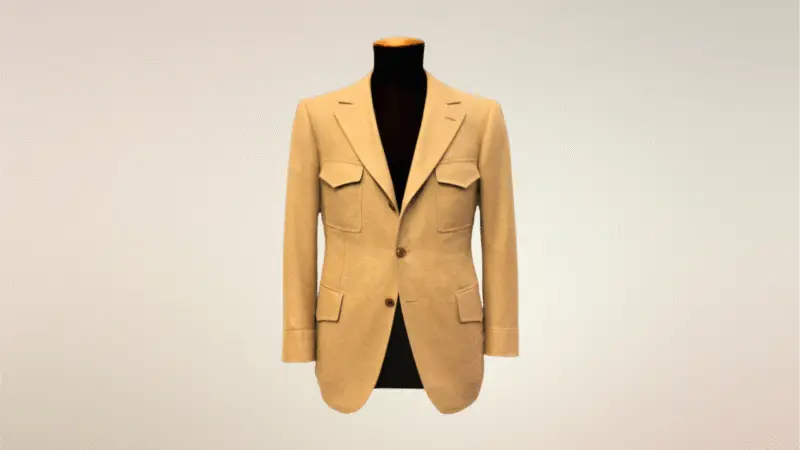
When and where was this item first created, and what practical purpose did it serve?
The 3-roll-2 blazer emerged in the early 1960s from American Ivy League colleges, particularly Harvard, Yale, and Princeton. This distinctive jacket represented a rebellion against formal British tailoring traditions that dominated menswear. The name describes its unique construction where three buttons are sewn onto the front, but only the middle two are functional for buttoning.
The top button rolls behind the lapel, creating a softer, more casual silhouette than traditional three-button jackets. Brooks Brothers popularized this design as part of their “Natural Shoulder” collection, marketing it to young professionals who wanted sophistication without stuffiness. The blazer served dual purposes as both academic uniform and weekend leisure wear.
Its relaxed approach to formal dressing reflected changing American attitudes toward authority and tradition. Students wore these blazers to classes, social events, and job interviews, establishing a new standard for educated casual dress.
The top button rolls behind the lapel, creating a softer, more casual silhouette than traditional three-button jackets. Brooks Brothers popularized this design as part of their “Natural Shoulder” collection, marketing it to young professionals who wanted sophistication without stuffiness. The blazer served dual purposes as both academic uniform and weekend leisure wear.
Its relaxed approach to formal dressing reflected changing American attitudes toward authority and tradition. Students wore these blazers to classes, social events, and job interviews, establishing a new standard for educated casual dress.
What are the key design features and construction methods of this item?
The 3-roll-2 blazer features a distinctively soft shoulder construction without padding or aggressive shaping. The lapels roll naturally from the second button, creating an effortless drape that distinguishes it from structured European tailoring. The jacket typically measures 30-32 inches in length with a natural waistline that follows the body’s contours rather than creating an artificial silhouette.
Side vents, usually single, allow for comfortable movement and maintain the relaxed aesthetic. The chest is cut fuller than contemporary slim-fit jackets, accommodating natural body shape without restriction. Patch pockets with soft construction replace the formal welted pockets of business suits.
The armholes are cut higher and smaller than modern blazers, creating a closer fit through the torso. Half-canvas construction provides structure while maintaining flexibility. The button stance sits lower than traditional three-button jackets, with approximately 4.
5 inches between the second and third buttons. This proportion creates the signature relaxed appearance that defined American casual elegance.
Side vents, usually single, allow for comfortable movement and maintain the relaxed aesthetic. The chest is cut fuller than contemporary slim-fit jackets, accommodating natural body shape without restriction. Patch pockets with soft construction replace the formal welted pockets of business suits.
The armholes are cut higher and smaller than modern blazers, creating a closer fit through the torso. Half-canvas construction provides structure while maintaining flexibility. The button stance sits lower than traditional three-button jackets, with approximately 4.
5 inches between the second and third buttons. This proportion creates the signature relaxed appearance that defined American casual elegance.
What cultural movements and social contexts featured this item?
The 3-roll-2 blazer became the uniform of the Kennedy-era establishment, embodying the sophisticated casualness of Camelot culture. Young politicians, journalists, and business leaders adopted this style as a rejection of their fathers’ rigid dress codes. The blazer appeared in countless photographs of civil rights leaders, anti-war protesters, and cultural revolutionaries who needed to maintain respectability while challenging authority.
Folk music icons like Bob Dylan wore 3-roll-2 blazers during early performances, blending intellectual credibility with artistic rebellion. The style dominated Madison Avenue advertising agencies where creative professionals needed to look serious without appearing corporate. College campuses from coast to coast embraced the blazer as standard dress for everything from fraternity mixers to graduate school interviews.
Television personalities and news anchors wore 3-roll-2 blazers to project authority while maintaining approachability. The garment perfectly captured the decade’s tension between tradition and change, allowing wearers to signal both sophistication and nonconformity simultaneously.
Folk music icons like Bob Dylan wore 3-roll-2 blazers during early performances, blending intellectual credibility with artistic rebellion. The style dominated Madison Avenue advertising agencies where creative professionals needed to look serious without appearing corporate. College campuses from coast to coast embraced the blazer as standard dress for everything from fraternity mixers to graduate school interviews.
Television personalities and news anchors wore 3-roll-2 blazers to project authority while maintaining approachability. The garment perfectly captured the decade’s tension between tradition and change, allowing wearers to signal both sophistication and nonconformity simultaneously.
Is this item still produced today, and how has it evolved over time?
Contemporary manufacturers still produce 3-roll-2 blazers, though true adherence to original proportions remains rare outside specialized heritage brands. Brooks Brothers continues making versions of their original Natural Shoulder model, maintaining the authentic soft construction and button stance. Smaller heritage clothiers like O’Connell’s and J.
Press preserve traditional construction methods, hand-padding lapels and using genuine horn buttons. Modern interpretations often compromise the original’s relaxed fit, adding contemporary slim tailoring that contradicts the style’s foundational philosophy. The rise of fast fashion has produced countless imitations that mimic the button configuration while ignoring crucial construction details.
High-end Italian manufacturers occasionally reference the 3-roll-2 in seasonal collections, though their versions typically incorporate European tailoring traditions that fundamentally alter the garment’s character. Bespoke tailors still create authentic examples for clients seeking historical accuracy. The style experiences periodic revivals among young professionals attracted to its anti-establishment heritage, though few understand the cultural significance behind its distinctive construction.
Press preserve traditional construction methods, hand-padding lapels and using genuine horn buttons. Modern interpretations often compromise the original’s relaxed fit, adding contemporary slim tailoring that contradicts the style’s foundational philosophy. The rise of fast fashion has produced countless imitations that mimic the button configuration while ignoring crucial construction details.
High-end Italian manufacturers occasionally reference the 3-roll-2 in seasonal collections, though their versions typically incorporate European tailoring traditions that fundamentally alter the garment’s character. Bespoke tailors still create authentic examples for clients seeking historical accuracy. The style experiences periodic revivals among young professionals attracted to its anti-establishment heritage, though few understand the cultural significance behind its distinctive construction.
How do you identify authentic vintage versions of this item?
Authentic vintage 3-roll-2 blazers feature navy wool flannel or wool gabardine with natural fiber content exceeding 95 percent. Period-correct fabrics display characteristic pilling patterns on sleeve cuffs and pocket edges where natural wool fibers have matured over decades. The shoulder construction shows no padding whatsoever, with canvas extending only through the chest area in a half-canvas configuration.
Original Brooks Brothers examples bear gold-stamped leather labels reading “Brooks Brothers Makers” with specific store locations like “Madison Avenue” or “Piccadilly. ” Genuine horn buttons show natural marbling patterns and slight transparency when held to light, unlike plastic reproductions. The lapel buttonhole should be hand-sewn with silk thread, showing slight irregularity that indicates human craftsmanship.
Vintage examples display specific aging patterns including natural fading at stress points and subtle shrinkage that creates the desired close fit through shoulders and chest. Thread should be silk throughout, showing characteristic sheen and natural fiber breakdown over time. Modern reproductions often use synthetic blends and machine-sewn buttonholes that lack the handmade quality of authentic pieces.
Original Brooks Brothers examples bear gold-stamped leather labels reading “Brooks Brothers Makers” with specific store locations like “Madison Avenue” or “Piccadilly. ” Genuine horn buttons show natural marbling patterns and slight transparency when held to light, unlike plastic reproductions. The lapel buttonhole should be hand-sewn with silk thread, showing slight irregularity that indicates human craftsmanship.
Vintage examples display specific aging patterns including natural fading at stress points and subtle shrinkage that creates the desired close fit through shoulders and chest. Thread should be silk throughout, showing characteristic sheen and natural fiber breakdown over time. Modern reproductions often use synthetic blends and machine-sewn buttonholes that lack the handmade quality of authentic pieces.