Backless dress
When and where was this item first created, and what practical purpose did it serve?
The backless dress emerged in Paris around 1923, created by revolutionary designers like Jean Patou and Coco Chanel who sought to liberate women from restrictive Victorian silhouettes. The original purpose was both practical and rebellious. Women needed freedom of movement for the new energetic dances like the Charleston and foxtrot.
The exposed back also served as a cooling mechanism during the hot, crowded speakeasy atmosphere where jazz music and dancing dominated nightlife. French couturiers specifically designed these gowns to showcase the newly fashionable slim, boyish figure that rejected the corseted hourglass shape. The backless design represented a radical departure from centuries of modest dress codes.
It allowed women to display their bodies confidently while maintaining an elegant silhouette from the front. The style required innovative internal construction to provide support without visible straps or closures. Early versions featured dramatic cowl draping that created structural integrity while revealing maximum skin.
The exposed back also served as a cooling mechanism during the hot, crowded speakeasy atmosphere where jazz music and dancing dominated nightlife. French couturiers specifically designed these gowns to showcase the newly fashionable slim, boyish figure that rejected the corseted hourglass shape. The backless design represented a radical departure from centuries of modest dress codes.
It allowed women to display their bodies confidently while maintaining an elegant silhouette from the front. The style required innovative internal construction to provide support without visible straps or closures. Early versions featured dramatic cowl draping that created structural integrity while revealing maximum skin.
What are the key design features and construction methods of this item?
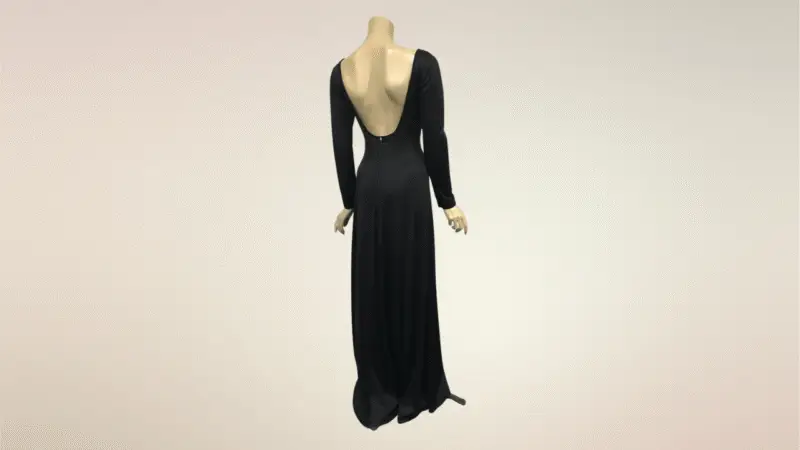
Key design features centered on structural innovation and dramatic visual impact. The neckline typically featured a deep scoop or cowl that extended to the natural waistline or below. Internal boning replaced traditional corsetry, creating invisible support systems.
Bias-cut construction allowed fabric to cling naturally to the body’s curves without additional shaping. The most sophisticated examples featured intricate draping that created architectural folds across the torso. Construction required expert pattern-making skills to achieve proper fit without back closures.
Many designs incorporated decorative elements like beaded chains, jeweled clasps, or trailing fabric panels that drew attention to the exposed spine. Sleeve variations ranged from completely sleeveless to dramatic cape effects that framed the open back. Hemlines typically fell between mid-calf and ankle length, creating an elongated silhouette.
Premium versions used luxury materials like silk crepe, chiffon, or metallic lames that moved gracefully with the body. The internal architecture often featured hidden snap closures at the neck or side seams. Strategic use of interfacing prevented fabric from pulling or distorting during wear.
Bias-cut construction allowed fabric to cling naturally to the body’s curves without additional shaping. The most sophisticated examples featured intricate draping that created architectural folds across the torso. Construction required expert pattern-making skills to achieve proper fit without back closures.
Many designs incorporated decorative elements like beaded chains, jeweled clasps, or trailing fabric panels that drew attention to the exposed spine. Sleeve variations ranged from completely sleeveless to dramatic cape effects that framed the open back. Hemlines typically fell between mid-calf and ankle length, creating an elongated silhouette.
Premium versions used luxury materials like silk crepe, chiffon, or metallic lames that moved gracefully with the body. The internal architecture often featured hidden snap closures at the neck or side seams. Strategic use of interfacing prevented fabric from pulling or distorting during wear.
What cultural movements and social contexts featured this item?
The backless dress became the uniform of the rebellious flapper movement and symbolized women’s rejection of Victorian moral constraints. Jazz Age culture embraced the style as visual representation of newfound social freedoms. Prohibition speakeasies provided the perfect venue for displaying these daring designs away from conservative public scrutiny.
Hollywood stars like Joan Crawford and Greta Garbo popularized the style through their film appearances, making backless gowns synonymous with glamour and sophistication. The Catholic Church and conservative groups condemned the style as immoral, which only increased its popularity among progressive women. Art Deco designers incorporated geometric patterns and metallic embellishments that complemented the era’s architectural aesthetics.
The style crossed class boundaries as ready-to-wear manufacturers created affordable versions for working women. International adoption spread through fashion magazines and cultural exchange, making Paris the epicenter of modern design. The backless dress represented women’s growing economic independence and social mobility.
Dance halls, nightclubs, and private parties became showcases for these revolutionary designs. The style challenged traditional gender roles by allowing women to control their own image and sexual expression.
Hollywood stars like Joan Crawford and Greta Garbo popularized the style through their film appearances, making backless gowns synonymous with glamour and sophistication. The Catholic Church and conservative groups condemned the style as immoral, which only increased its popularity among progressive women. Art Deco designers incorporated geometric patterns and metallic embellishments that complemented the era’s architectural aesthetics.
The style crossed class boundaries as ready-to-wear manufacturers created affordable versions for working women. International adoption spread through fashion magazines and cultural exchange, making Paris the epicenter of modern design. The backless dress represented women’s growing economic independence and social mobility.
Dance halls, nightclubs, and private parties became showcases for these revolutionary designs. The style challenged traditional gender roles by allowing women to control their own image and sexual expression.
Is this item still produced today, and how has it evolved over time?
Contemporary designers continue producing backless dresses with significant evolution in construction and styling. Modern versions incorporate advanced materials like power mesh, silicone grips, and invisible adhesive supports that provide security without compromising aesthetics. Today’s interpretations range from subtle keyhole openings to dramatic floor-length gowns with completely exposed backs.
Red carpet events and formal occasions remain primary venues for showcasing backless designs. Contemporary construction techniques allow for more adventurous cuts and structural experiments than 1920s technology permitted. Current trends include asymmetrical openings, geometric cutouts, and multi-layered draping effects.
High-end designers like Tom Ford and Versace have reimagined the classic silhouette with contemporary proportions and materials. Fast fashion retailers offer accessible versions that capture the style’s essential drama. Athletic wear has adopted backless principles for performance and aesthetic appeal.
Wedding dress designers frequently incorporate backless elements as modern bridal statements. The style continues evolving through celebrity influence and social media exposure. However, the fundamental appeal of the dramatic back reveal remains unchanged from its Jazz Age origins.
Red carpet events and formal occasions remain primary venues for showcasing backless designs. Contemporary construction techniques allow for more adventurous cuts and structural experiments than 1920s technology permitted. Current trends include asymmetrical openings, geometric cutouts, and multi-layered draping effects.
High-end designers like Tom Ford and Versace have reimagined the classic silhouette with contemporary proportions and materials. Fast fashion retailers offer accessible versions that capture the style’s essential drama. Athletic wear has adopted backless principles for performance and aesthetic appeal.
Wedding dress designers frequently incorporate backless elements as modern bridal statements. The style continues evolving through celebrity influence and social media exposure. However, the fundamental appeal of the dramatic back reveal remains unchanged from its Jazz Age origins.
How do you identify authentic vintage versions of this item?
Authentic 1920s backless dresses feature specific silk crepe or chiffon fabrics with characteristic hand-finished French seams and couture-level construction details. Original pieces display natural aging patterns including silk deterioration along stress points and period-appropriate oxidation of metallic threads or beadwork. Genuine examples show hand-sewn internal boning channels and canvas interfacing typical of 1920s couture construction methods.
Authentic labels include established French houses like Patou, Lanvin, or Poiret with period-appropriate typography and placement. Original closures feature mother-of-pearl buttons, fabric-covered snaps, or hand-sewn hook-and-eye systems rather than modern plastic components. Authentic proportions reflect 1920s body ideals with dropped waistlines, straight silhouettes, and specific hem lengths that differ from later interpretations.
Period beadwork displays hand-stitching irregularities and uses glass beads with different optical properties than modern materials. Vintage pieces often show evidence of period alterations or repairs using matching techniques and materials. Original construction includes bound edges, hand-rolled hems, and internal finishing methods that demonstrate professional dressmaking standards.
Authentic labels include established French houses like Patou, Lanvin, or Poiret with period-appropriate typography and placement. Original closures feature mother-of-pearl buttons, fabric-covered snaps, or hand-sewn hook-and-eye systems rather than modern plastic components. Authentic proportions reflect 1920s body ideals with dropped waistlines, straight silhouettes, and specific hem lengths that differ from later interpretations.
Period beadwork displays hand-stitching irregularities and uses glass beads with different optical properties than modern materials. Vintage pieces often show evidence of period alterations or repairs using matching techniques and materials. Original construction includes bound edges, hand-rolled hems, and internal finishing methods that demonstrate professional dressmaking standards.